


“It’s not stress that kills us, it is our reaction to it.” — Hans Selye, pioneer of stress research
Pressure is a part of every meaningful life. Whether it’s exams, career deadlines, family responsibilities, or financial worries, stress touches everyone. But the difference between breaking down and breaking through often lies in how we respond to that pressure.
Take MS Dhoni, for example. As captain of the Indian cricket team, he faced enormous expectations from millions of fans. In interviews, he has openly spoken about mental pressure and the importance of fitness, discipline, and emotional control. His performance under stress did not come from ignoring pressure, it came from training his body and mind to handle it.
Thriving under pressure doesn’t mean pretending everything is easy. It means building habits that support you when things are hard.
Stress Is Physical, Not Just Emotional
When you feel stressed, your body releases cortisol and adrenaline. These hormones prepare you to react quickly. In short bursts, this is helpful. It sharpens focus and boosts energy.
But if stress continues for weeks or months, your body does not get the signal to relax. That’s when problems begin: poor sleep, headaches, irritability, anxiety, and constant fatigue.
Even global leaders experience this. Indra Nooyi, former CEO of PepsiCo, often spoke about the intense pressure of leadership. She highlighted the importance of maintaining health and personal discipline despite a demanding role. Without recovery, performance suffers.
The lesson is simple: unmanaged stress drains you. Managed stress strengthens you.
Practical Ways to Stay Calm Under Pressure
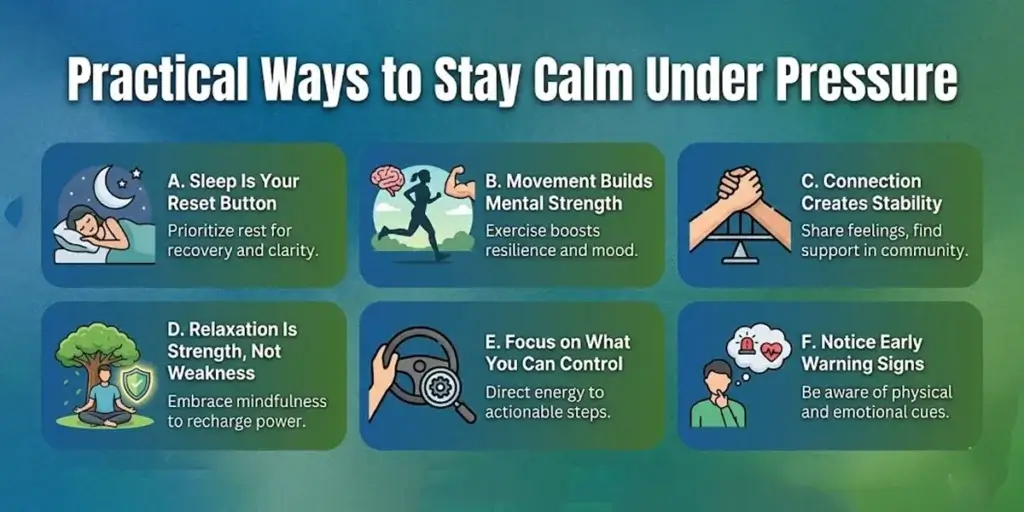
1.Sleep Is Your Reset Button
Many people sacrifice sleep to “get more done.” But this often backfires.
One of the first things stress disrupts is sleep. And poor sleep makes stress worse, creating a cycle that’s hard to break.
Studies show that people who regularly sleep fewer than six hours a night are more than twice as likely to report mental distress compared to those who get seven to eight hours. Sleep deprivation affects the same brain areas that control emotional regulation. That’s why everything feels heavier and more personal when you’re exhausted.
Sleep is not laziness. It is brain maintenance. It allows your nervous system to reset. Protecting your sleep schedule may be one of the most powerful mental health decisions you make.
Successful entrepreneurs like Arianna Huffington have openly discussed collapsing from exhaustion due to overwork. After that experience, she became a strong advocate for sleep and well-being, reminding people that burnout is not a badge of honour.
Seven to eight hours of sleep is not laziness. It is maintenance for your brain and nervous system.
2.Movement Builds Mental Strength
Exercise is one of the most effective stress relievers. It reduces cortisol and releases endorphins, natural mood boosters.
You don’t need extreme workouts to protect your mental health.
A large study published in The Lancet Psychiatry found that people who exercised regularly experienced 43% fewer days of poor mental health than those who did not exercise at all. The strongest benefits came from moderate activities like walking, strength training, cycling, or recreational sports, not intense, exhausting workouts.
You don’t need extreme workouts. Even a daily 30-minute walk can change how you handle pressure.
Consider Barack Obama, who prioritised daily workouts even during his presidency. Despite leading one of the most demanding jobs in the world, he made time for exercise because it helped him stay mentally sharp and emotionally steady.
Consistency matters more than intensity.
3.Connection Creates Stability
Humans are not designed to handle pressure alone.
Humans are wired for connection. Isolation is not just uncomfortable, it is harmful.
Research shows that chronic loneliness increases the risk of anxiety and depression. One large analysis found that social isolation is linked to a 29% higher risk of early mortality, similar to risks associated with smoking and obesity.
You don’t need dozens of friends or constant social plans. What matters is meaningful connection. A conversation where you feel heard. A friend who checks in. A family member who listens. Connection regulates your nervous system in ways willpower cannot.
During difficult times, even high achievers rely on support systems. Deepika Padukone, after speaking publicly about her battle with depression, highlighted the importance of talking openly and seeking support. Her story helped reduce stigma around mental health in India.
A simple conversation with someone who listens can reduce stress more than you realise. You don’t need a large social circle. You need meaningful connection.
4.Relaxation Is Strength, Not Weakness
Many people believe they must always stay busy to succeed. But constant activity without rest leads to burnout.
Many people treat relaxation as optional, something they’ll do “when things calm down.” But relaxation is not a reward. It is preventive care.
Studies on mindfulness, breathing exercises, and relaxation techniques show measurable reductions in cortisol, blood pressure, anxiety, and depressive symptoms.
If you never allow your nervous system to rest, it will eventually force you to often through burnout, illness, or emotional shutdown.
Short daily practices deep breathing, meditation, prayer, journaling, or quiet reflection help calm the nervous system. Just 10–15 minutes can lower stress levels.
Even athletes train in cycles of effort and recovery. Without recovery, performance drops. The same principle applies to life.
5.Focus on What You Can Control
Pressure often feels overwhelming because everything seems urgent. Instead of trying to fix everything at once, break tasks into smaller steps.
For example, if work feels stressful, focus on completing one priority task at a time. If exams feel overwhelming, study one chapter instead of worrying about the entire syllabus.
Small wins build confidence. Confidence reduces stress.
6.Notice Early Warning Signs
Are you sleeping poorly? Snapping at loved ones? Avoiding calls? Feeling constantly tired?
These are signals not failures. Paying attention early prevents burnout later.
Seeking help from a counselor or therapist is not a weakness. It is awareness.
Conclusion
Thriving under pressure is not about eliminating stress. It is about balancing effort with recovery.
Sleep well. Move regularly. Stay connected. Slow down intentionally. Ask for help when needed.
Pressure is part of growth. But when you learn to regulate your response, pressure stops controlling you and starts shaping you into someone stronger, calmer, and more resilient.
That is the true meaning of thriving under pressure.